Locked Out of Your House? Here's Your Step-by-Step Plan
Stay Calm and Assess the Situation
Being locked out of your own home is frustrating, but panic only makes things worse. The first step is to take a deep breath and evaluate your circumstances. Are you locked out of the main entrance, or is every door and window secured? Do you have your phone with you? Do you have a spare key hidden somewhere, or is a family member nearby who could let you in? These questions help you decide the quickest and safest way back inside.
If you have a smartphone, check if you have a smart lock or a garage door opener app that could grant you entry. Many newer homes have electronic locks or remote-controlled garage doors that can be operated from a phone. If that doesn't work, look around for open windows or an unlocked side door. But remember: if you need to break a window or force a door, you will likely cause more damage than a small service fee from a locksmith. That is where a professional becomes your best option.
Check for Spare Keys and Trusted Contacts
Before you call anyone, think about your spare key situation. Do you keep a duplicate with a neighbor, a family member, or in a lockbox on the property? If you remember hiding a key under the mat or in a fake rock, check those spots. But be aware that those common hiding places are also the first places a burglar would look. If you find a key, test it gently in the lock cylinder to make sure it works without forcing it. A bent key can break off and turn a simple lockout into a broken lock problem.
If there is no spare key available, reach out to someone who might have a copy: a roommate, a spouse, a grown child who lives elsewhere, or even a landlord. A quick phone call can save you the cost and time of a locksmith visit. If none of those options pan out, it is time to call a professional.
Call a Residential Locksmith You Can Trust
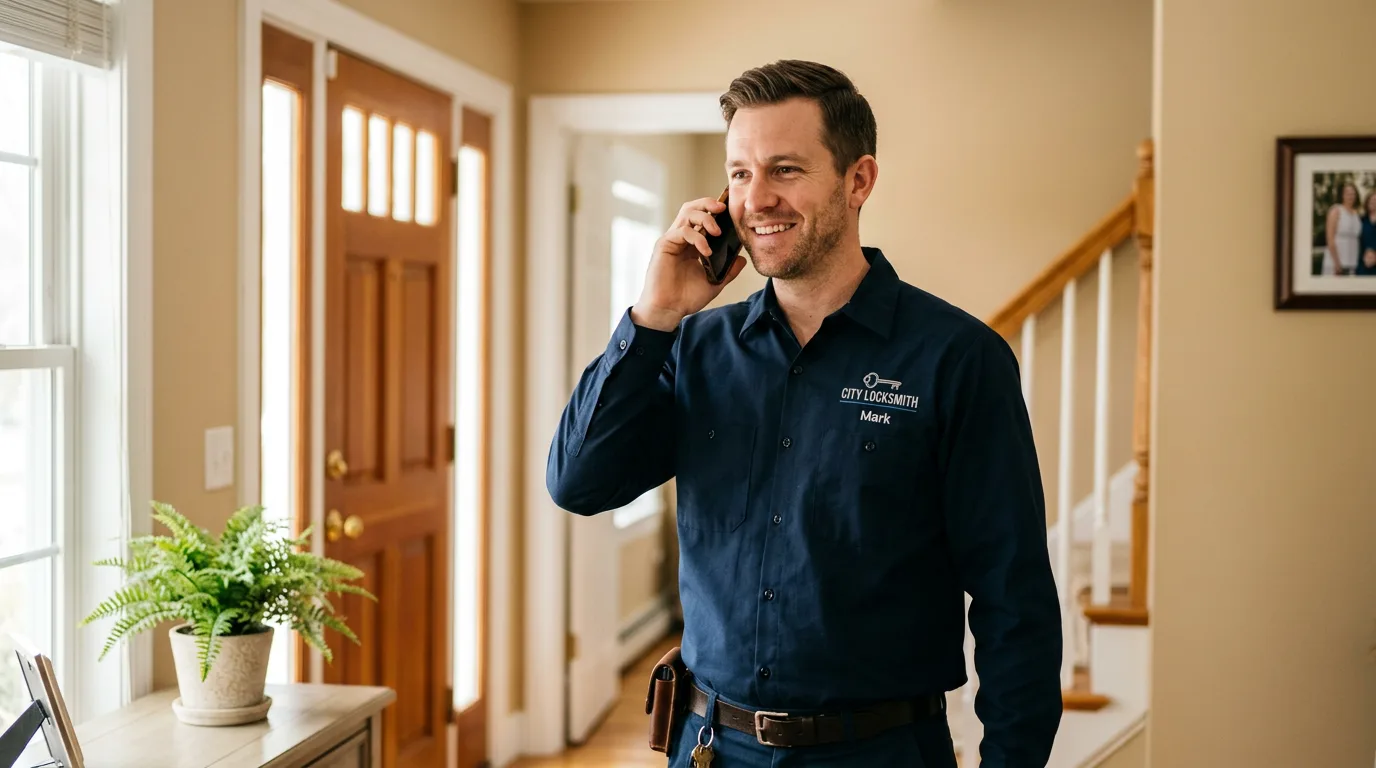
When you are locked out, your first instinct might be to call the first number you find online. But take a moment to choose wisely. A reputable residential locksmith will ask for your location, your situation, and some form of identification or proof of residence before they come out. Be ready to provide your driver's license, a utility bill, or even a piece of mail with your name and address. This protects you and the locksmith from any liability.
A good locksmith will arrive with the tools for non destructive entry. This means they can open most standard deadbolts and latches without drilling or damaging your door frame or lock cylinder. Ask the dispatcher if they can perform non destructive entry. If they hesitate or say they will need to drill, consider calling another company. A professional who handles homes, vehicles, and businesses daily will have the right tools and experience to get you inside cleanly.
What to Expect from the Service Call
Once you have selected a locksmith, they will ask for your address and a description of your door and lock. Be ready to tell them if you have a deadbolt, a keypad lock, or a standard latch. If your lock is a high-security brand or a smart lock, mention that too. The locksmith will then dispatch a technician to your location. Depending on the time of day and traffic, this could take anywhere from fifteen minutes to an hour. If you are in a busy area like Nassau County, a local company can often reach you faster than a national chain.
When the technician arrives, they will ask for your proof of residence and then inspect the lock. They will use specialized tools to manipulate the lock cylinder and retract the latch or deadbolt. In most cases, they can open the door within a few minutes without causing any damage. If the lock is especially old or jammed, they may need to apply gentle pressure or use a tension wrench. But a skilled locksmith will always try non destructive methods first. Only if those fail will they consider drilling, and they should explain the cost and the repair needed before doing so.
What to Do While You Wait
While you wait for the locksmith, do not try to force the door open yourself. Prying at the door frame with a crowbar or kicking the door can cause expensive damage to the wood, the lock, and even the door itself. Similarly, do not attempt to pick the lock unless you have experience. A half-hearted attempt can break the lock cylinder or leave a tool stuck inside, making the locksmith's job harder and more expensive.
If it is cold or hot outside, or if you have children or pets with you, find a safe place to wait. If you are locked out of your house at night, stay in a well-lit area near the door so the technician can find you easily. And keep your phone charged so you can communicate with the locksmith if they need to call you for directions or clarification.
After You Get Inside: Prevention Tips
Once you are safely back inside, take a few minutes to prevent this from happening again. The most obvious fix is to make a duplicate house key and give it to a trusted neighbor or family member who lives close by. You can also install a lockbox with a combination code near your door. Just be sure to choose a sturdy box that is weather-resistant and not easy to tamper with.
Another smart upgrade is to install a smart lock that can be opened with a code, a fingerprint, or your phone. Many models let you create temporary codes for guests or service workers. This way, even if you lose your physical key, you can still get inside with a code or a smartphone app. If you do not want to replace your entire lock, consider rekeying your existing deadbolt and latch to a new set of keys. A locksmith can do this in minutes and it is far cheaper than buying a whole new lock system.
When to Call a 24/7 Mobile Locksmith
Lockouts do not follow a nine-to-five schedule. They happen late at night, on weekends, and during holidays. That is why it is smart to save the contact info for a 24/7 Mobile Locksmith in your phone before you need it. A service that operates around the clock can respond to an emergency lockout at any hour. They have the tools and experience to handle residential locks, and they can often reach you faster than a company that only works during business hours.
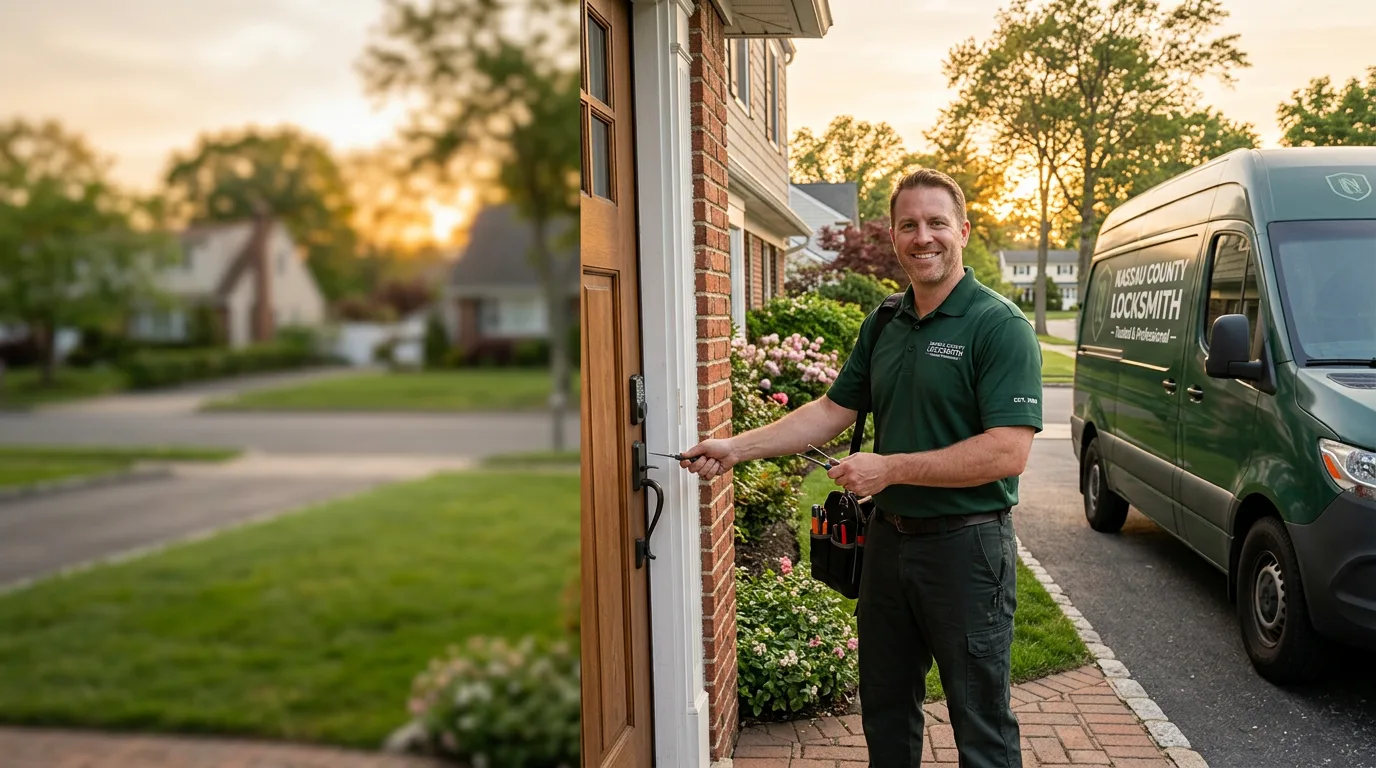
For homeowners in Nassau County, a local 24/7 Mobile Locksmith is a reliable resource. They know the area, the common lock types used in local homes, and they can get to you quickly. Keep their number handy, and if you ever find yourself locked out, you will have one less thing to worry about. Just remember to have your proof of residence ready, describe your lock clearly, and let the professional do their job. With the right help, a lockout is just a minor inconvenience, not a major crisis.
Final Thoughts
A house lockout can happen to anyone, and it usually happens at the worst possible moment. But with a clear head, a spare key plan, and the number of a trusted locksmith, you can resolve the situation quickly and without damage. The key is to stay patient and avoid DIY fixes that could cost you more in the long run. By taking a few preventive steps now, you can make sure that the next time you reach for your house key, it is actually there.